

EMPOWERING GROWTH THROUGH PLAY IN THE MADISON & HUNTSVILLE AREAS OF ALABAMA
Private Academy &
Early Learning Assessments
for for Children Ages 3–5
As a parent, it can be difficult to see your child struggling.

Understanding behavior starts with seeing the whole child.
When a young child is struggling with big emotions, challenging behaviors, social interactions, or classroom expectations, it can be difficult to understand what’s really going on.
WellSpace Play Therapy provides observational assessments for children ages 3–5 within private academies and early learning environments—helping families and educators better understand a child’s needs and determine how to support them moving forward.
Understanding Your Child
in Their Natural Environment
More than observing behavior—we’re looking for what may be behind it.
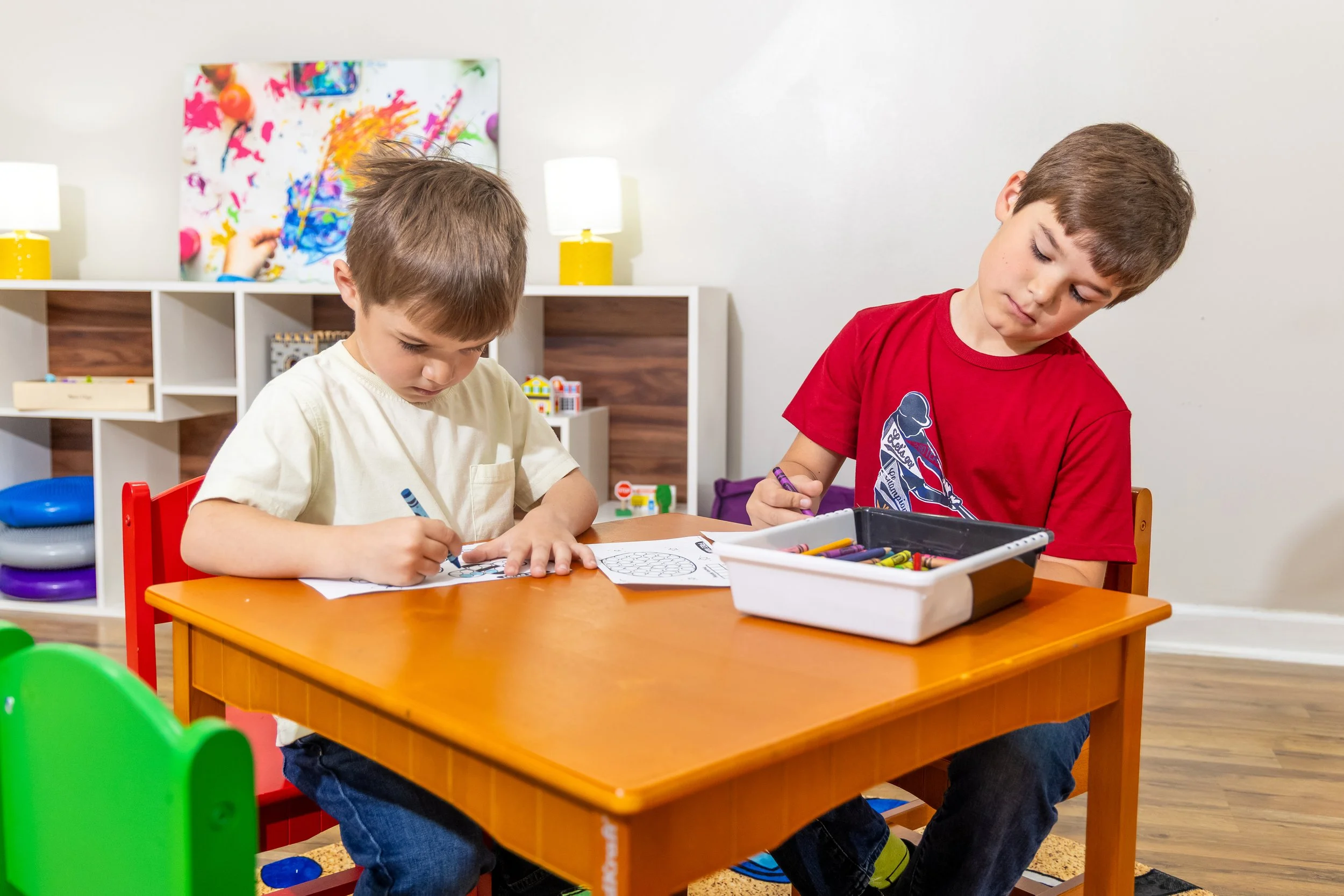
By observing children where they naturally learn, play, and interact, our clinicians gain valuable insight into how they navigate their everyday environment.
During an observational assessment, we may look at how a child:

Interacts With Peers
Understanding social connections, communication, boundaries, and play.
Responds to
Direction
Observing how they process and respond to guidance from teachers and staff.
Manages
Emotions
Identifying patterns of frustration, anxiety, anger, or emotional dysregulation.
Communicates Needs
Looking at how children express wants, feelings, discomfort, and requests for help.
Handles Transitions
Observing their response to changes in activities, routines, and expectations.

Why Observational Assessments Matter
Behavior tells us something. Our goal is to understand what.
Challenging behaviors can be connected to emotional regulation, developmental needs, environmental stressors, communication difficulties, or skills that are still developing.
Observing a child in their natural learning environment can help us identify patterns that may not be as noticeable in other settings.
From there, we can provide individualized recommendations and determine how play therapy or other developmentally appropriate interventions may help support the child’s emotional, behavioral, and social development.



Working Together to Support the Child
Because children do best when the adults around them are working together.
Our support doesn’t end with the observation.
WellSpace collaborates with parents, teachers, childcare staff, academy leadership, and other members of the child’s support system to create greater consistency between home, school, and therapeutic environments.
Following an observation, our team may provide:
One-on-one feedback for parents
Guidance for teachers and childcare staff
Recommendations for academy leadership
Practical strategies for challenging behaviors
Education surrounding children’s mental health needs
Support for anxiety and emotional regulation
Strategies for strengthening communication and social-emotional skills
Our goal is to give the adults in a child’s life practical, developmentally appropriate tools they can use every day.

Connecting Families With Ongoing Support
Observation is just the beginning.
When additional support may be beneficial, WellSpace helps families and facilities identify appropriate next steps, community resources, and ongoing therapeutic services.
Continued counseling and play therapy can help children strengthen:
Emotional Regulation · Coping Skills · Communication · Problem-Solving · Social Skills · Healthy Responses to Challenges
By bringing together the child, family, educators, and mental health professionals, we can create a more connected support system centered around the child’s individual needs.

Every child deserves to feel understood and supported.
Whether you’re a parent concerned about your child’s behavior or an academy looking for additional support for a student, WellSpace Play Therapy is here to help you better understand what may be happening and determine the next steps forward.
Interested in an observational assessment for a child ages 3–5?
Complete our contact form to learn more about observational assessments and collaborative services.